>1. Why did Jesus' disciples pick heads of grain and eat the kernels?
* Luke 6:1 "One Sabbath Jesus was going through the grainfields, and his disciples began to pick some heads of grain, rub them in their hands and eat the kernels."
* Also in Matthew 12:1-8 and Mark 2:23-28.
* "One Sabbath" -Luke did not specify how long before or after the previous events this incident happened perhaps because he did not know. Luke stated at the beginning of his gospel that he had researched by careful investigation the events of Jesus' life. Those he interviewed remembered as the Holy Spirit inspired them. Either they did not remember the exact timing, or they told him and he did not record the exact time because the timing of the event was not important to his account. However, Matthew records that this event happened after Jesus had sent out the twelve apostles and after he had instructed them when John the Baptist has been put into prison. (Matthew 12:1)
* "Sabbath" -Genesis 1:1-2:3 records that God (Elohim in Hebrew) created the heavens and the earth. The account contains seven days. Only one day was given a name. The first six days are labeled by their sequential order, one thru six. The last day is called the Sabbath (Shabbat in Hebrew) meaning "to cease" or "desist". God blessed the Sabbath and made it holy, because on it he rested from his creating work. The Israelites were instructed to rest every seven days as part of the Mosaic covenant. (Exodus 20:8-11, 23:10-12, 31:12-17, 35:1-3; Leviticus 23:1-3; Deuteronomy 5:12-15; Isaiah 56:1-7, 58:13; Ezekiel 20:12-20; Jeremiah 17:21-27; Nehemiah 13:15-22) They were the first ones in history recorded to rest from working once every seven days.
* "One Sabbath" -The KJV and YLT have "the second sabbath after the first" and " the second-first sabbath" respectfully. The original Greek, "deuteroproton" literally is "second-first", and obscure expression and interpolated. It probably means, "on the second sabbath after the waving of the sheaf on the second day of the Passover festival (Exodus 23:15-16; Leviticus 23:1-15). It was the custom to number the sabbaths from Passover to Pentecost from this day. There are other interpretations as to what this odd term means. The Jewish Encyclopedia conjectures that the disciples were blamed for plucking the ears before the sheaf was waved, which was forbidden (Leviticus 23:15).
* "Jesus was going through the grainfields" -Wheat, spelt (emmer), barley, and millet are the common grains in Palestine in Biblical times. The KJV translates grain as corn, not meaning North American maize.
* "his disciples began to pick some heads of grain" -The disciples were not stealing. The Mosaic law allowed the poor to pick grain from the edges of the fields. This was a form of social charity. (Leviticus 23:22, 19:10, 25:35)
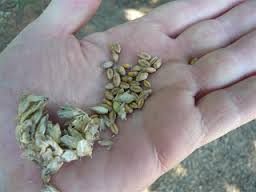
* "rub them in their hands and eat the kernels" -The disciples performed a simple act in order to separate the husks from the kernels.
* The disciples harvested, threshed, winnowed, and prepared their food; four Talmud violations is one act.
* This passage is relevant in any generation. Questions like; "What is the Sabbath? Why is it important? What should I do on the Sabbath and what should I exclude?" are some of the questions any serious Bible student asks. Jesus answered these questions many times in different ways during his ministry because one of the biggest complaints the religious leaders had against Jesus was his teaching, actions, and view of the Sabbath.
>What does this suggest about Jesus' disciples?
* The disciples were hungry.
* They were poor simple men who were not to proud to live as such.
* They were hard workers who improvised when it was necessary.
* They were practical.
* We can assume that the disciples didn't know all the details of the Sabbath laws made up by the Pharisees. This was common among the poor in Galilee at the time.
* Modern day people could think, "They didn't have table manners." Yet, the religious leaders also saw this as breaking with tradition.
* Compared to fishing, what they were doing wasn't work. The Pharisees didn't do any hard labor like a fisherman. So their definition of work was different.
* Grain isn't part of luxuries.
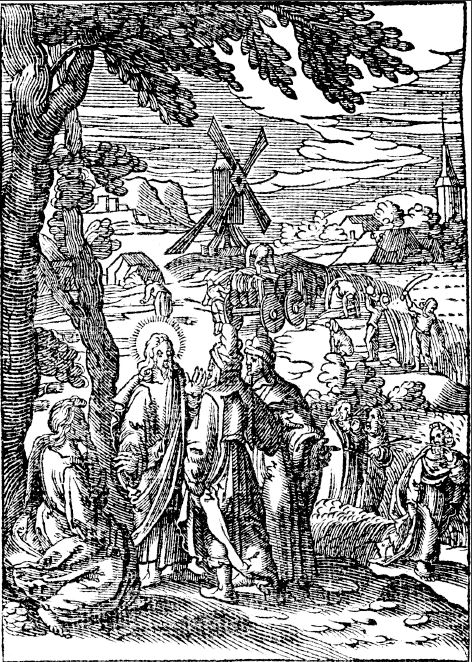
* The engraving is Jesus debating the Pharisees as his disciples gathers grain on the Sabbath. It includes the monogram of the woodcutter, Christoffel van Sichem II (1577-1658) near the head on the right; his son, Christoffel van Sichem III (1618-1659), may have collaborated with him on these images. Courtesy of the Digital Image Archive, Pitts Theology Library, Candler School of Theology, Emory University.
>2. Why did the Pharisees rebuke them? (Ex. 20:8-10)
* Luke 6:2 "Some of the Pharisees asked, "Why are you doing what is unlawful on the Sabbath?"
* Exodus 20:8-10 "Remember the Sabbath day by keeping it holy. Six days you shall labor and do all your work, but the seventh day is a Sabbath to the LORD your God. On it you shall not do any work, neither you, nor your son or daughter, nor your manservant or maidservant, nor your animals, nor the alien within your gates."
* The Sabbath has been the subject of much discussion and writing since before Jesus was born. The Jewish religious leaders had written a book they called the Talmud, the first section of which is called the Mishnah. It contains their additions to and interpretation of the Mosaic law. The additional laws were meant to protect them from breaking the law of the Mosaic covenant and thus their special relatioship with God. Someone has described the Mishnah this way; a violation of the Mosaic law is a pit that could not be escaped, so to avoid getting near the pit a gate called the Mishnah was created around the pit. The Mishnah was written 200 years before Jesus was born. The Mishnah contained a large section on what a good Jew could and could not do on the Sabbath. The Sabbath became the heart of the law during the inter-biblical time. Thirty-nine tasks were banned, such as tying or untying a knot. These in turn were extended until ingenious evasions were devised that lost the spirit but satisfied the legal requirement.
* "Some of the Pharisees" -Some Pharisees were traveling with Jesus. They did not ask questions to learn, they looked for reason to discredit him.
* "Pharisees" -Pharisees were an important part of Jewish society. Not only did they teach people, they also acted as spiritual and social policeman. They studied the Old Testament very deeply, even memorizing the first five books (Mosaic law). They also studied the Talmud. A major part of their official job was to patrol the city streets and country roads to stop people from violating the Mosaic and Talmud laws. They had authority to arrest and detain people. Often they acted as judge and executioner. Pharisees are present day walking the streets of Israel again.
* "Why" -Very interested seeing just what they asked. The fact that they ask a question and make statements is unimportant for as usual, the gospel writers do not account for every word spoken by everyone. Some quote this person, others quote another, and they all at one time only quote what one says in part at one time or another.
* "Why are you doing" -The first verse does not state that Jesus was actually doing this. The Pharisees couldn't find fault in Jesus, so they found fault in his disciples. Since the disciples were doing what they considered unlawful they blamed their teacher for their error.
* They asked Jesus. They didn't say anything to the disciples. This shows their motive of discrediting him.
* "unlawful on the Sabbath" -The Pharisees considered violating the Mishnah the same as violating the Mosaic law.
* The Pharisees would have had prepared food with them so that they wouldn't violate the Mishnah laws. They did not offer this food to the hungry disciples. Instead they complained about Jesus' disciples.
* Purpose of the Sabbath was:
To physically rest as the traveling and hard working Israelites needed.
To help the Israelites be holy people by spending time with God.
To act as a prophecy of the ages past and to come.
>3. What did Jesus teach them from David's example? (1 Samuel 21:1-6; Leviticus 24:9)
* Luke 6:3-4 "Jesus answered them, "Have you never read what David did when he and his companions were hungry? He entered the house of God, and taking the consecrated bread, he ate what is lawful only for priests to eat. And he also gave some to his companions."
* 1 Samuel 21:1-6 "David went to Nob, to Ahimelech the priest. Ahimelech trembled when he met him, and asked, "Why are you alone? Why is no one with you?" David answered Ahimelech the priest, "The king charged me with a certain matter and said to me, 'No one is to know anything about your mission and your instructions.' As for my men, I have told them to meet me at a certain place. Now then, what do you have on hand? Give me five loaves of bread, or whatever you can find." But the priest answered David, "I don't have any ordinary bread on hand; however, there is some consecrated bread here--provided the men have kept themselves from women." David replied, "Indeed women have been kept from us, as usual whenever I set out. The men's things are holy even on missions that are not holy. How much more so today!" So the priest gave him the consecrated bread, since there was no bread there except the bread of the Presence that had been removed from before the LORD and replaced by hot bread on the day it was taken away."
* Leviticus 24:9 "It belongs to Aaron and his sons, who are to eat it in a holy place, because it is a most holy part of their regular share of the offerings made to the LORD by fire."
* Isaiah 58:6-7; Luke 13:16-17, 14:1-6
* David, who had been serving Saul and was his son-in-law was running away from Saul's sword and hate. He went to the Lord's priests for help. They asked what he was doing there. David lied to them. The priest gave David the consecrated bread to eat. Only the priests were allowed to eat this bread according to the law of Moses. The priests suggested and allowed it and the Lord did not condemn David nor his men.
* Jesus and David were feeding their men. They meet the needs of God's people without breaking the spirit of the law.
* Jesus and the disciples were doing better than David and his men. David and his men were lying and running for their life.
* "Have you never read" -The Pharisees would have read and been familiar with the passage. Jesus was giving them a gentle rebuke. Knowing isn't the same as understanding.
* "the house of God" -The house of God was the place where the ark of the covenant was kept. The ark symbolized God's presence among God's people. The tabernacle (a tent) was the first "house of God". After the Israelites entered the promised land a solid structure at Shiloh replaced the tabernacle. (Joshua 18:8; Judges 18:31, 21:19-21; 1 Samuel 1:3, 24, 4:4) When Israel's enemies destroyed the temple at Shiloh (1 Samuel 5:1; Jeremiah 7:14) the ark was moved to several places including Nob, about one mile from ancient Jerusalem, until Solomon build a temple in Jerusalem. (1 Samuel 7:1-2)
* "consecrated bread" -When persons or things were consecrated, "they were separated to or belonged to God". In Exodus 25:30, the Lord's instructions concerning the paraphernalia of worship include a provision that bread be kept always on a table set before the Holy of Holies. This bread was called the bread of presence, or shewbread. The literal meaning of the Hebrew expression is "bread of the face." It consisted of twelve loaves of presumably unleavened bread, and it was replaced each sabbath. (Holman Bible Dictionary)
>How was Jesus' view of the law different from that of the Pharisees?
* Human need should not be subjected to barren legalism. (Tyndale New Testament Commentaries)
* Mark added more than Luke. Mark 2:27-28 records that Jesus said to them, "The Sabbath was made for man, not man for the Sabbath. So the Son of Man is Lord even of the Sabbath."
>What can we learn from Jesus about the spirit of the law?
* The Sabbath was given so that man could have a good life before God.
* Jesus summed up the law as love for God and love for our neighbor.
* The Sabbath was given to enhance our love relationship with God and each other.
* The Sabbath was given as an example of what is to come. (Hebrews 4:9) A joyful weekly experience with God and his people should be a source of hope of what is to come to God's people.
>4. What do Jesus' words, "The Son of Man is Lord of the Sabbath" mean?
* Luke 6:5 "Then Jesus said to them, "The Son of Man is Lord of the Sabbath."
* "The Son of Man" -Jesus used this phrase to refer to his place as Messiah. The prophet Daniel is the first person to use this term both Biblically and extra-Biblically. Extensive search by many have confirmed this. Jesus confirmed he was the son of man through his continual use, referring to himself as the son of man. "Son of Man" refers to the virgin birth. The virgin birth is very important in the redemption of fallen mankind. Without Jesus being born in this way, he could not be without sin and therefore could not have been the perfect spotless sacrifice.
* Romans 5:15-17 "But the gift is not like the trespass. For if the many died by the trespass of the one man, how much more did God's grace and the gift that came by the grace of the one man, Jesus Christ, overflow to the many! Again, the gift of God is not like the result of the one man's sin: The judgment followed one sin and brought condemnation, but the gift followed many trespasses and brought justification. For if, by the trespass of the one man, death reigned through that one man, how much more will those who receive God's abundant provision of grace and of the gift of righteousness reign in life through the one man, Jesus Christ."
* 1 Corinthians 15:20-22 "But Christ has indeed been raised from the dead, the first fruits of those who have fallen asleep. For since death came through a man, the resurrection of the dead comes also through a man. For as in Adam all die, so in Christ all will be made alive."
* "Lord" -The original Greek is "kyrios". Among other things it means Jesus has authority for he is "owner" and "master". Jesus is the Lord of everything, master and owner. (Isaiah 45:18) "Kyrios" is also used in the Septuagint (third century B.C. Greek translation of the Old Testament) for the Lord God, the God of Abraham, Isaac, and Jacob throughout Israel's history.
* "Lord of the Sabbath" -After giving a Biblical proof Jesus makes a remarkable proclamation; he is Lord of the Sabbath. The Sabbath was a divine ordinance; to be Lord of a divine ordinance makes one equal with the divine.
* Jesus is the meaning, the heart of the Law including the Sabbath.
* It may be significant that this follows a reference to David's action. It is the Son of David who is Lord. If David could override the law without blame, how much more could the much greater Son of David do so? (Tyndale New Testament Commentaries - Luke)
* Matthew 5:17 "Do not think that I have come to abolish the Law or the Prophets; I have not come to abolish them but to fulfill them."
*
Why Are You Asking?
Why were the Pharisees so concerned about the disciples eating grain? Didn't they know the disciples were hungry? Didn't they know that the Lord gave the poor permission through Moses to eat grain from the edge of the crops? (Leviticus 23:22, 19:10, 25:35; Deuteronomy 23:25) Were they concerned about being associated with crude, uneducated men? No to all these, except perhaps in part the last question, and added to it jealousy of Jesus' popularity and gifts. Their intent was to discredit Jesus, with the hope that his followers would begin to have doubts about Jesus, leave him, and begin to appreciate and follow them. After all, they believed he didn't live the true Jewish way as they did. The religious leaders, like many people today, are more interested in winning and exerting authority and power over others than exercising compassion and love.
Jesus usually responded to questions like this one with his own straight-to-the-heart-of-the-matter question, and not answering in the way the people asking the question expected. (Matthew 12:1-8; Mark 2:23-28) Their pride always underestimated Jesus' divine wisdom.
Jesus did not deny that his disciples were breaking either one of their Mishnah rules, or even their understanding of Leviticus 23:9-15 harvest rules, if this was before the Feast of the Waving of the Sheaf, which is celebrated on the first day (Sunday) after the Sabbath after Passover. Instead, he appeared to agree, though actually Jesus challenged their understanding of the law given through Moses. David clearly appeared to violate a law given through Moses, with the permission of the high priest, who was the only one allowed to eat it (along with other priests and their families). However, Jesus reminded (if they already knew and accepted) that David, their hero king, had not broken the Mosaic Law. And with that, can Jesus make the astonishing true claim, "The Son of Man," as he referred to himself, "is Lord of the Sabbath." (5) I cane say as fact that Jesus laid them flat with that claim, equating himself with the Lord of the Mosaic Law.
Jesus could just as well have used the example of the time of Hezekiah, when all of Israel celebrated the Passover instead of the Mosaic Law required first month because not enough priests had consecrated themselves and the people had not assembled in Jerusalem at the appointed time. "God heard them (their praise, and their songs and hymns) for their prayers reached heaven, his holy dwelling place." (2 Chronicles 30:1-5, 21, 23-27) Hezekiah was just as important and popular among the first-century religious establishment as David. Jesus teaches me to learn the spirit of the word of God and live in the Spirit of the Word.
Listen to the above comments on Luke 6:1-5.
II. Jesus Restores a Man's Shriveled Hand (6-11)
>5. What problem did Jesus encounter in the synagogue on another Sabbath?
* Luke 6:6 "On another Sabbath he went into the synagogue and was teaching, and a man was there whose right hand was shriveled."
* Also in Matthew 12:9-14 and Mark 3:1-6.
* "On another Sabbath" -Luke did not follow chronological order here. He put together subjects about the Sabbath.
* "he went into the synagogue and was teaching" -Later in Jesus' ministry the Pharisees band Jesus from teaching in the synagogues.
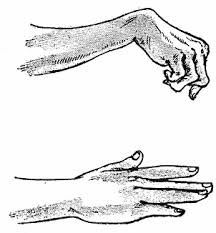
* "a man was there whose right hand was shriveled" -See illustration of a shriveled hand compared to a straight, normal hand.
>Think of the troubles this man must have had because of his shriveled hand.
* People often stared at him strangely.
* He had to adjust his life.
* He felt different, even cursed.
* He wouldn't be able to find a good job in those days.
* People would often say he was cursed, rejected by God.
* No woman would marry him for he would be hard pressed to support her and a family in a labor intensive society.
* Shriveled hand and shriveled heart.
* People with disabilities today experience similar problems in most societies as this man.
>6. How did the Pharisees view this man?
* Luke 6:7 "The Pharisees and the teachers of the law were looking for a reason to accuse Jesus, so they watched him closely to see if he would heal on the Sabbath."
* "were looking for a reason to accuse Jesus" -A tool to accuse Jesus.
* An insignificant person.
* "to see if he would heal on the Sabbath" -As strange as it seems they considered healing forbidden work on the Sabbath even though such miracles were only from God. They had reverse logic that boggles the mind.
* False and distorted religions are not logical. False and distorted religions oppress people.
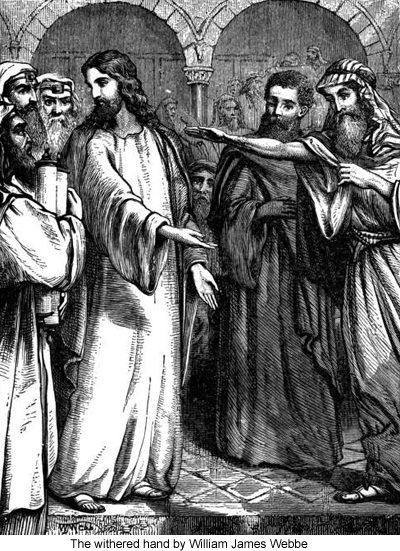
* The engraving is by William James Webbe (1830-1904), an English Victorian painter and book illustrator, more than a primary printmaker or engraver, best known for his Pre-Raphaelite-inspired nature studies and Middle Eastern biblical scenes. Following a pilgrimage to Jerusalem and the Middle East in 1862, his focus shifted toward biblical subjects and Eastern scenes, showing the influence of artist William Holman Hunt. He worked as a book illustrator using the name W.J. Webb, contributing to children's Bibles and volumes published by Raphael Tuck & Sons.
>How did they try to use him?
* They wanted to trap Jesus. They knew that Jesus had the power to heal and the compassion to do so, a silent compliment to Jesus. So they wanted to see if Jesus would heal this man. Normally people with disabilities were made to sit in the back of a Jewish synagogue in Jesus' day. They believed that such people were cursed by God, and therefore should be treated as such. However, it appears that they allowed (or placed) this man in visable of Jesus, who at this time in his ministry was often given the honor of reading and teaching from the Torah (Old Testament).
>Why were they so opposed to Jesus?
* They were jealous of his popularity.
* They did not love God.
* Jesus taught against their teachings which they believed was God inspired.
* They were drunk with power over other's lives.
* Power by oppression generates more oppression until all are crushed.
>How was Jesus' view of this man different from that of the Pharisees?
* Luke 6:8 "But Jesus knew what they were thinking and said to the man with the shriveled hand, "Get up and stand in front of everyone." So he got up and stood there."
* Jesus believed this man could show God's love and power.
* "But Jesus knew what they were thinking" -Only God has this ability. The Holy Spirit in a believer in Jesus can give then this gift. Some of the prophets had this ability. (2 Kings 8:10; Jeremiah 11:18)
* "Get up and stand in front of everyone." -Jesus commanded because he wanted all to know who he was and the power he has. God often wants us to show what he has and is about to do in our lives.
* "So he got up and stood there." -He obeyed Jesus most likely in anticipation to being healed. A public witness is sometimes needed.
*
Jesus Knew Their Thoughts.
Jesus joined the local Jewish congregation at their synagogue on the day of rest, named the Sabbath, for the Hebrew word in Genesis chapter 1 means "to cease" or "desist". Meeting weekly at a local congregation had become a tradition since the time of the Babylonian exile. Jesus and his disciples continued in this good practice. Jesus, being a popular and respected teacher (Rabbi) was usually the one asked to teach. This day was no exception. (6)
The Pharisees and teachers of the law used to be the ones asked to teach. However, Jesus had grown more popular. So, he superseded them in being the chosen teacher. They did not receive this well. They were jealous and were looking for a reason to accuse Jesus, discredit him, and remove him from approved teacher lists. So they watched him closely. (7; Matthew 12:9-10; Mark 3:1-2)
Jesus knew what they were thinking and intending. Knowing a person's thoughts is a gift of the Spirit that is sometimes given. (2 Kings 4:27) Jesus reveals this gift is full. His response was full of grace. He did not say, "I know your evil thoughts. How you plan to trap me and discredit me." Rather, Jesus used their thoughts and the occasion to practically teach them and reveal who he was. He had the man with a shriveled hand stand up. Usually cripples were considered cursed and told to sit in the back. The religious leaders had him sit up front that day, hoping they could use him to their benefit, that is if Jesus healed him on a Sabbath, something they considered a violation of the Mosaic Law.
Now came Jesus' practical teaching moment. "I ask you, which is lawful on the Sabbath: to do good or to do evil, to save life or to destroy it?" (9) The answer is easy, but they did not answer because they didn't want to look like the proud fools they were. (Matthew 12:11-12; Mark 3:4) Jesus was angry and deeply distressed at their stubborn hearts. (10; Mark 5:5) Jesus healed the man. They did not change and their stubborn foolish hearts turned to darker, eager to do the devil's will. (11; Matthew 12:13; Mark 3:6)
Beware soul! Jesus knows your thoughts. Jesus knows your heart. He does not condemn. He is full of grace. He seeks to reveal the truth of your soul to you. Bend your will to the truth. Change and you will be saved!
Listen to the above comments on Luke 6:6-8.
>7. How did Jesus respond to their challenge of his messianic ministry?
* Luke 6:9 "Then Jesus said to them, 'I ask you, which is lawful on the Sabbath: to do good or to do evil, to save life or to destroy it?'"
* "I ask you" -God often ask us the obvious question because answering it correctly will lead to life found only in Jesus.
* Jesus did not simply heal. He taught them too.
>Why did he not heal the man privately on some other day?
* Jesus wanted to teach the Pharisees and all about the Sabbath and who he was.
>What did he teach the religious leaders about good and evil and the purpose of the Sabbath?
* "which is lawful on the Sabbath"
* "to do good or to do evil" -Jesus answers this long and many times asked question. How? What does he say next?
* "to save life or to destroy it" -Saving life is doing good. Destroying life is evil. Saving lives are good. Destroying life is evil.
* How can we save lives?
* Sabbath was made to be good.
>8. What did it cost Jesus to help this one poor useless man?
* Luke 6:10-11 "He looked around at them all, and then said to the man, "Stretch out your hand." He did so, and his hand was completely restored. But they were furious and began to discuss with one another what they might do to Jesus."
* The Pharisees hate and rejection to the point of death was one of the results of Jesus' grace to this man.
* Matthew added that after this event the religious leaders began plotting how they would kill him. (Matthew 12:14)
>What can we learn here from Jesus?
* The value of one soul is greater than our position. Jesus said no greater love than one lay down his life for his friends. And that is what he did.
* Jesus viewed this man healing more than his favor among the religious leaders.
* Do what is right without worrying about what others think of me.
* A right time to do the right thing always exists in Christ.
*
Jesus Honors the Dishonored.
The general first-century consensus, backed by the religious establishment, was that people who suffered mishap and casualty most definitely did so as the result of some sin. This was true in Jewish, Greek, and Roman societies. Job's friends believed this of him. (Job 4:7-8, 15:5-6, 22:4-5) People generally believe that God, or some kind of vague sense of morality, punishes wrong acts. The Hindu and Buddhist religions might call this karma (or natural consequences), meaning they take God out of the formula while holding onto some vague sense of right and wrong that has the power to generate good and bad consequences.
If one was born with an abnormality, the Pharisees and teachers of the law believed it was because of a past sin (transmigration of a soul) or one committed in the womb. The disciples asked Jesus about this concerning a man born blind. (John 9:2) Elizabeth believed in the intelligence and spiritual blessing of her unborn child, John, when he jumped in her womb at the sound of Mary, Jesus' mother, voice. (Luke 1:41) Then there is the case of the Lord's words concerning Rebekah's twin sons, Jacob and Esau, jostling in her womb. (Genesis 25:21-24)
Now, it was custom to have sinners stand in the back of the synagogue. But not this day. The day that Jesus was teaching, the Pharisees and teachers of the law told the man with the shriveled hand to sit in front of Jesus to see what Jesus would do on the Sabbath. They knew that Jesus was full of compassion for obvious sinners. They were pretty sure he would heal him. They were right, but not without teaching them something. The man's hand was physically shriveled, but their hearts were also shriveled. They needed healing too. Jesus said, "If you had known what these words mean, 'I desire mercy, not sacrifice,' you would not have condemned the innocent." (Matthew 12:10) And, "Now much more valuable is a man than a sheep!" (Matthew 12:12)
Listen to the above comments on Luke 6:9-11.
III. Jesus Chose The Twelve (12-16)
>9. After his conflict with the Pharisees what did Jesus do?
* Luke 6:12 "One of those days Jesus went out to a mountainside to pray, and spent the night praying to God."
* Jesus appointing twelve Jewish men as apostles is also in Mark 3:13-19. Matthew 10:1-4 records who they are, but does not record Jesus appointing them. Rather Matthew brings their names up only when Jesus sends them out.
* "One of those days" -not directly after. Mark and Luke follow the same time line for these three events. Matthew, more chronically correct, places the naming of the apostles earlier.
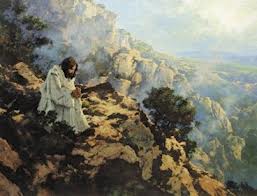
* "Jesus went out to a mountainside" -A quiet lonely place can be a good place to pray.
* "spent the night praying to God" -
* "God" -The original Greek word is "Theos" used 1,343 times in the New Testament meaning the Supreme Deity. "Theos" is masculine, not feminine or neutral. Greek "thea" is the feminine goddess.
>Why?
* For direction.
* For communion with God.
* For strength.
>What might he have prayed about?
* His disciples.
* The future work of God.
* Jesus is recorded to pray all night now and on the Mount of Olives, two very important times.
* Jesus cared for the helpless without losing sight of raising the apostles.
* Jesus prayed for the his potential leaders.
>10. Why did he choose twelve of his disciples and designate them apostles right from the beginning of his ministry?
* Luke 6:13 "When morning came, he called his disciples to him and chose twelve of them, whom he also designated apostles:"
* A disciples in those days learned from a master at anytime and all times. They would live with them.
* Jesus wanted to work with them.
* Twelve (12) tribes were chosen for Israel under the old covenant, Twelve (12) men for the church under the new covenant.
* Twelve men is considered the most one person can train effectively at one time.
>What does this suggest about Jesus' purpose in choosing them?
* To be his witnesses.
* Jesus had faith in God to change them so they could bring the gospel to the whole world.
* "apostle" -Apostle means sent.
* Jesus had vision.
>11. Who were the men he chose?
* Luke 6:14-16 "Simon (whom he named Peter), his brother Andrew, James, John, Philip, Bartholomew, Matthew, Thomas, James son of Alphaeus, Simon who was called the Zealot, Judas son of James, and Judas Iscariot, who became a traitor."
>What kind of men were they?
* Simon Peter -ambitious, man of action, bold, self sufficient, hard worker, had a big mouth that often had little content.
* Andrew -simple, man of possibilities, had a "nothing is impossible" spirit.
* James -Son of thunder with his brother, ambitious, little compassion.
* John -Son of thunder with his brother, man of understanding and thinking, passionate, ambitious, little compassion.
* Thomas -doubter
* Philip -Thinker, brilliant, negative at first.
* Bartholomew -Nathan (John 1:35), daydreamer
* Matthew -tax collector, determined
* James son of Alphaeus
* Simon who was called the Zealot
* Judas son of James
* Judas Iscariot, who became a traitor
>What do you think were his criteria for selecting those he would train?
* young and middle aged
* men
* learning mind
* workers
* healthy
* slow to understand like everyone else
* eating all the time
* Jews
*
The Twelve Apostles.
Jesus planned for the future. He knew of his coming crucifixion, death, resurrection, and ascension. When he left he would leave the continuing work to spread the good news to others in the care of a few handpicked men.
Several people were following Jesus by this time. Determining who would carry out the task, and preparing them, required all-night, personal, lonely prayer with God, his Father. Prayer is important always; the more important a life decision, the greater the need for communion with God my Father.
When the sun rose above the horizon, Jesus called all his disciples to him and chose twelve of them, the same number as the tribes of Israel. This was intentional purpose. Also intentional was giving them a name. He called them apostles, "apostolos" in the original Greek. The word means "a delegate, especially an ambassador with the implication that they would be sent. Jesus told them after his resurrection, "Peace be with you! As the Father has sent me, I am sending you. Receive the Holy Spirit." (John 20:21) The writer of Hebrews refers to Jesus as an apostle sent by God, the Father. (Hebrews 3:1) In that sense, I too am sent and given the Holy Spirit.
Matthew, Mark, and Luke give the names of the twelve with little description of their personality and physical appearance. (Matthew 10:1-3; Mark 3:13-18) A few we know little about from the gospels and only a little more from church history. Other apostles, we knew more about; enough to know that they had some similarities and yet had different personalities and backgrounds. The same can be said of the people in the Old Testament and the people in the letters of the apostles. No matter a person's character, background, and gifts, if a person willfully accepts Jesus' call, they too can be sent.